
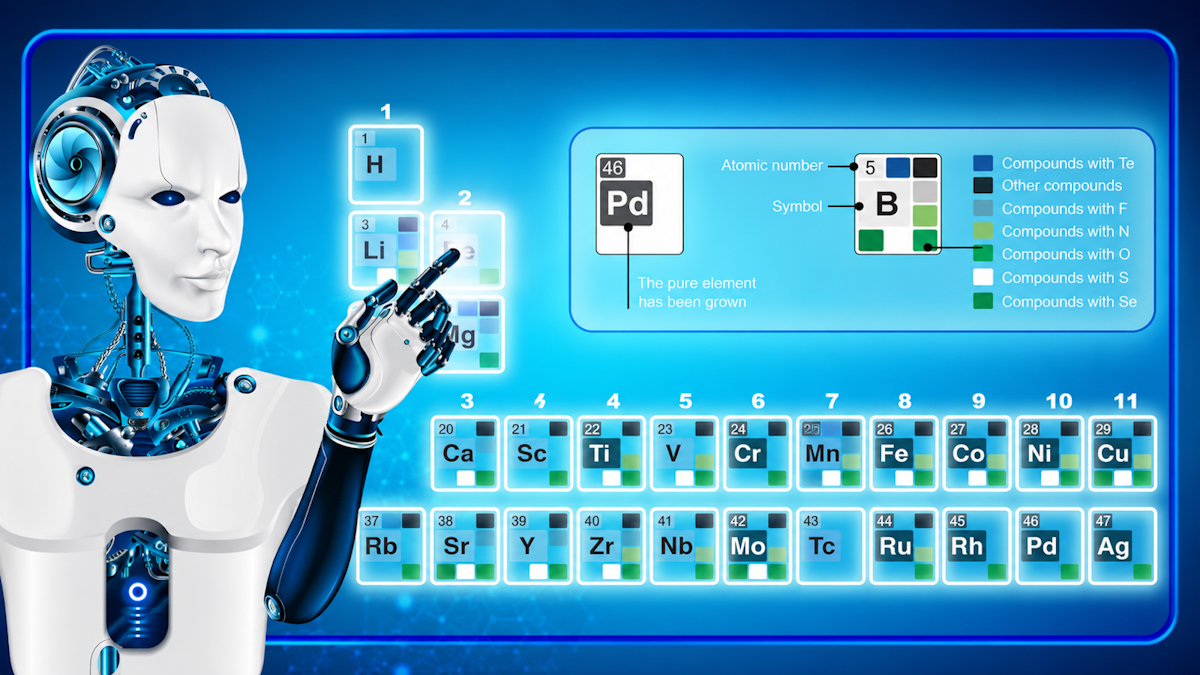
This year, the annual ALD/ALE conference was held in Tampa, Florida (June 28–July 1, 2026). During the tutorial session on Sunday afternoon, I gave a talk titled Current and Future Perspectives on Atomic Layer Deposition. In this blog post, I would like to highlight some of the key messages from that tutorial, along with the results of several live polls in which I was able to engage the audience. These polls also provide a natural entry point into a theme that became increasingly difficult to ignore throughout the conference: the rapidly expanding role of artificial intelligence in our field.
The tutorial—which can be downloaded at the end of this blog post—covered a range of topics that are more interconnected than they might first appear. I started with a brief introduction to ALD, since the session was aimed both at newcomers and at more experienced ALD researchers. In this context, I introduced the AtomicLimits ALD database as a resource for identifying which processes have been developed for different materials, along with other tools available on this blog (ImageBase, ReviewBase, etc.). I then presented a structured ten-step workflow for ALD process development, originally discussed in a previous blog post and currently being updated (so stay tuned). After that, I turned to the potential future role of AI in materials and process development, with a particular focus on the idea of building an AI-ready database. Finally, I highlighted several material classes and related challenges for which robust ALD processes and strategies are still missing.
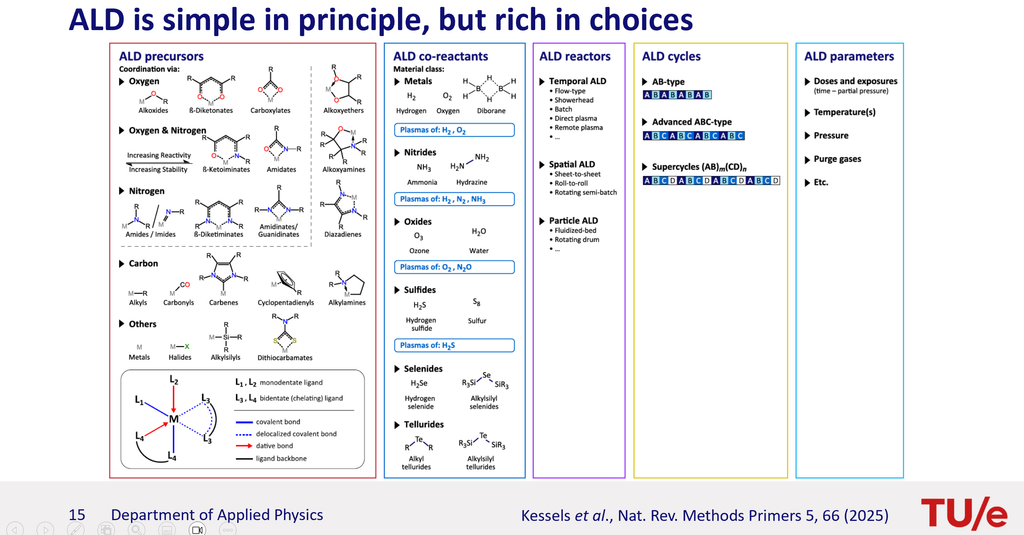
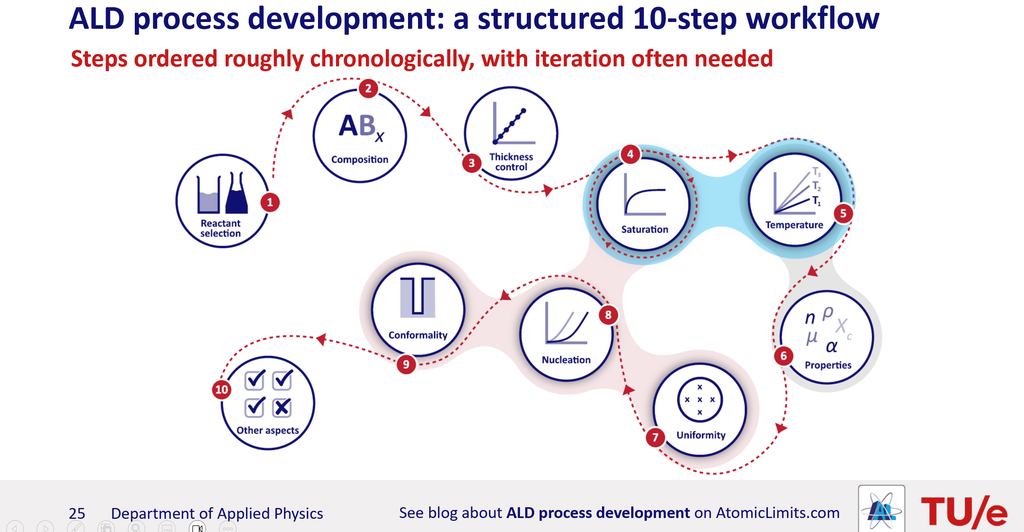
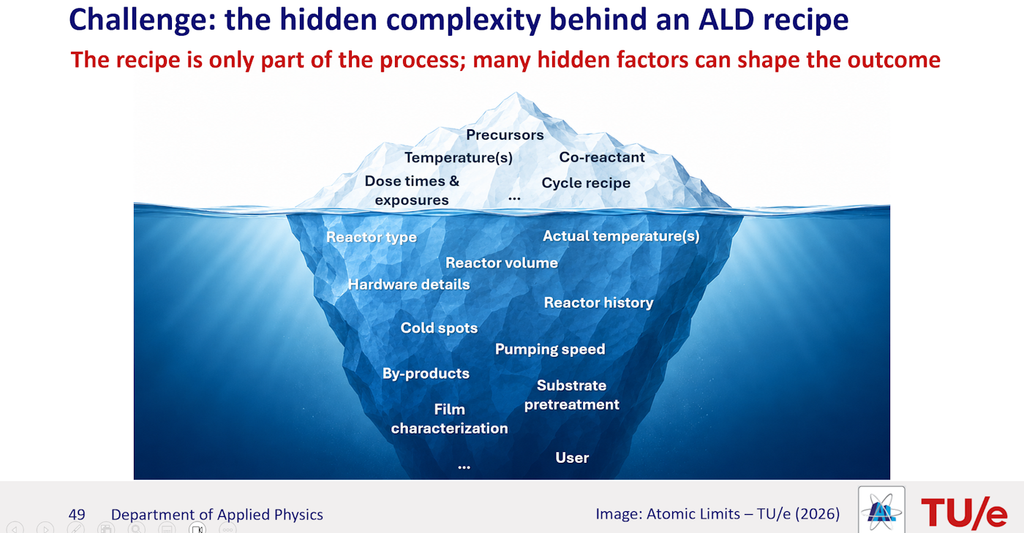
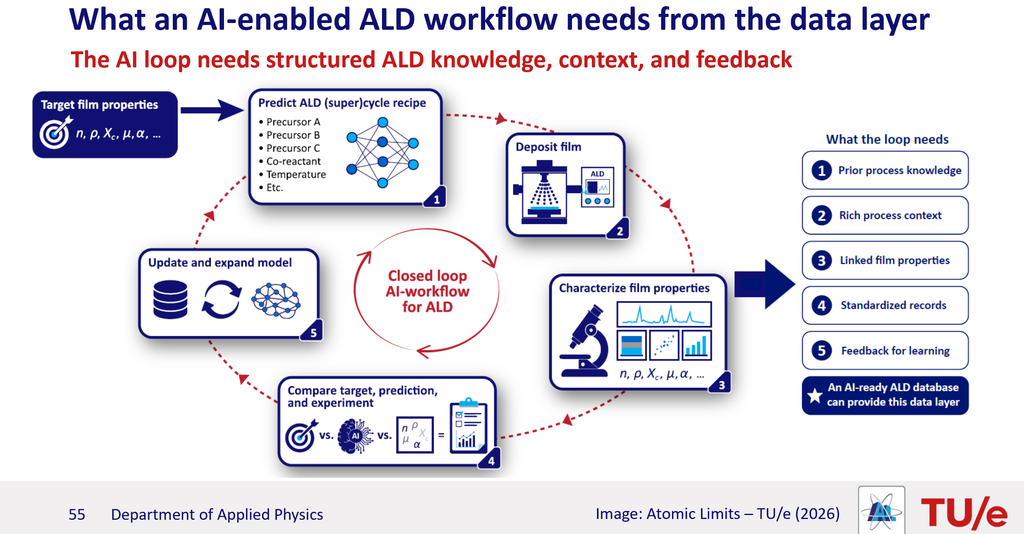
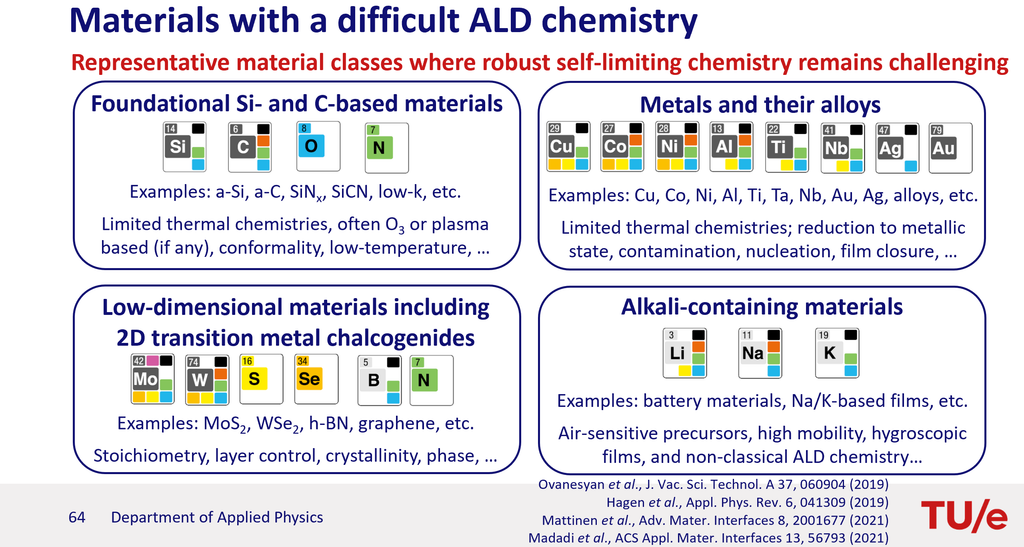
Selected slides from the tutorial Current and Future Perspectives on Atomic Layer Deposition. Together, they illustrate the path from the many choices involved in ALD process development, through structured workflows and hidden process complexity, toward AI-enabled research and some of the field’s remaining materials challenges.
As mentioned earlier, the different parts of the tutorial were closely connected. At its core, ALD is conceptually simple: two or more self-limiting surface reactions are repeated cyclically to grow a thin film with atomic-scale precision. In practice, however, the method quickly turns into a landscape of interdependent decisions. One has to select appropriate precursors and reactants, define suitable process conditions, confirm true self-limiting growth behavior, and ultimately achieve the targeted composition, structure, and functional properties. On top of that, there are additional practical constraints such as nucleation behavior, thickness uniformity, conformality in high-aspect-ratio structures, reproducibility across runs and tools, throughput considerations, and integration with surrounding process steps in a device flow, etc.
A structured workflow can help us manage this complexity and supports more systematic process development as well as more consistent data reporting. At the same time, it is important to recognize that the “recipe” alone only captures part of what actually governs the outcome of an ALD process. Factors such as reactor design, reactor history and conditioning, precursor delivery dynamics, substrate preparation, and the true local substrate temperature can all have a significant influence on the final result. Many of these details are either not reported or only partially reported in the literature, and are often not even fully known to the researchers performing the experiments. This leads to a familiar situation: we typically only see the tip of the iceberg, while a large fraction of the relevant experimental context remains hidden below the surface.
With sufficiently structured and well-curated data, artificial intelligence could become an increasingly powerful tool in this space. AI could help retrieve and connect information, uncover hidden trends across studies, propose experimental directions, and optimize process parameters. However, these capabilities critically depend on access to reliable and well-documented data, rich and consistent metadata, relevant domain knowledge, and rigorous experimental validation. One way forward is the development of AI-ready databases built on structured, machine-readable data. Such infrastructure could not only improve knowledge extraction and reuse, but also help address some of the persistent challenges in ALD development. Several important material classes—including metals and their alloys, low-dimensional materials, alkali-containing compounds, as well as key silicon- and carbon-based systems—still lack robust and well-controlled ALD processes. In the longer term, AI-assisted approaches may offer new pathways to close some of these gaps.
To involve the audience in these topics, I included four live polls in the tutorial. Unfortunately, the results could not be shown during the presentation because of a technical problem. Fortunately, they were preserved—so I can finally share them here.
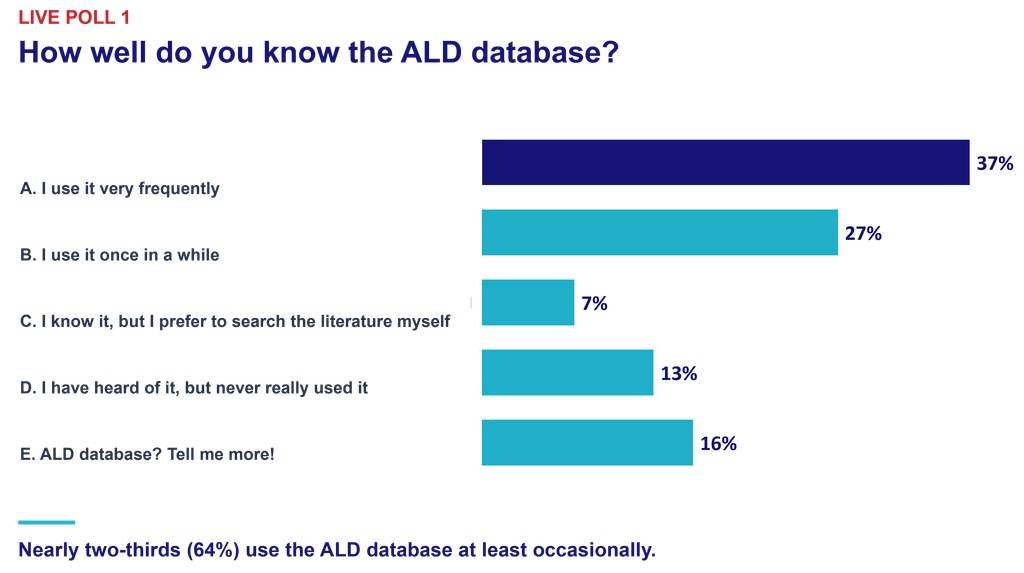
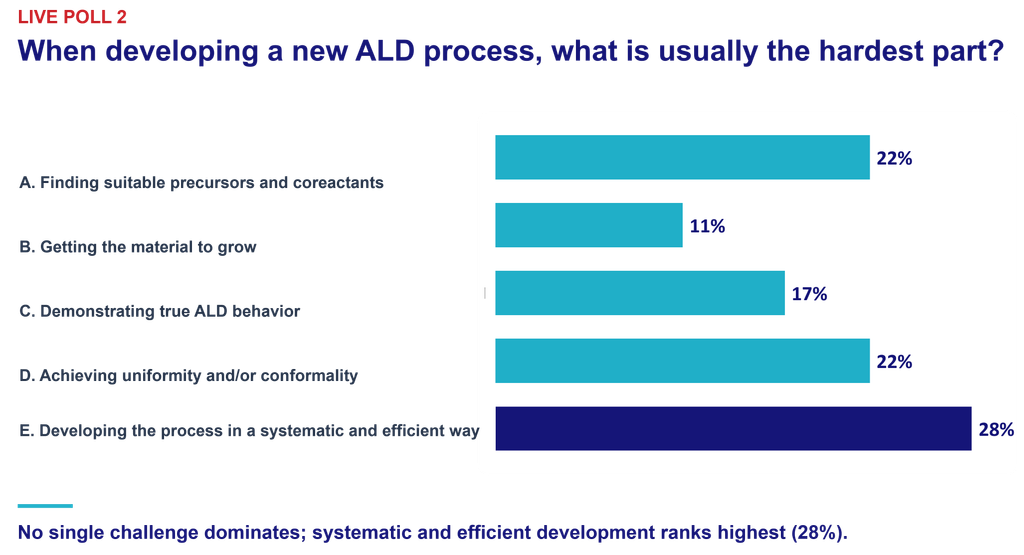
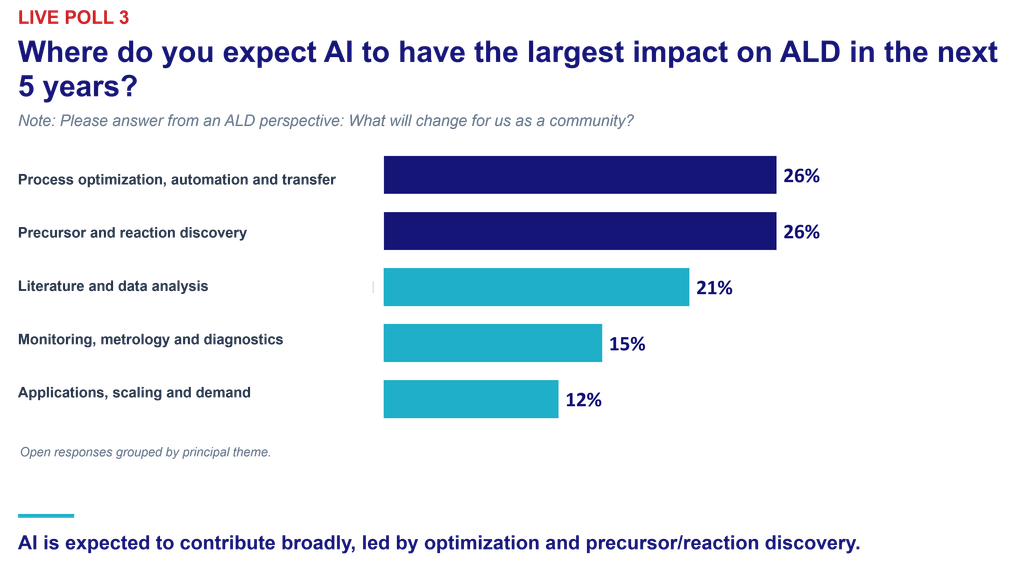
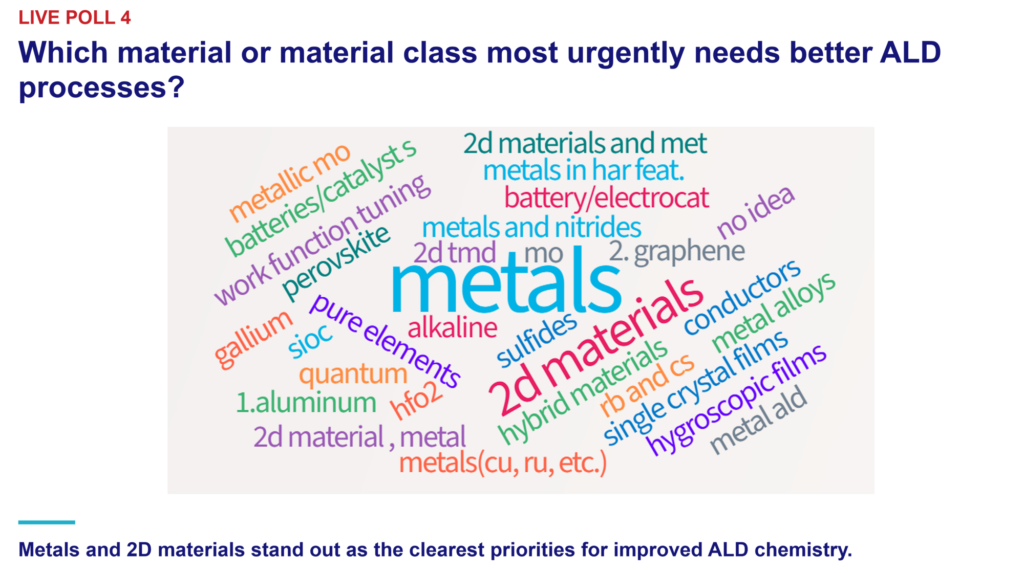
What did the audience think? These four live polls during my tutorial Current and Future Perspectives on Atomic Layer Deposition explored the use of the AtomicLimits ALD database, challenges in ALD process development, the future role of AI, and the materials still needing better ALD processes. A technical problem prevented me from showing the results during the tutorial—so here they finally are.
The first question concerned the AtomicLimits ALD database. Almost two-thirds of respondents use it at least occasionally: 37% use it very frequently and another 27% from time to time. This is encouraging, although the results also indicate that there is still potential to increase both awareness and usage.
The second question addressed what is typically the most challenging aspect of developing a new ALD process. No single issue clearly dominated. Identifying suitable precursors and co-reactants and achieving uniformity or conformality both received 22% of the votes. Demonstrating true ALD behaviour accounted for 17%, while simply initiating growth of the material received 11%. The most common response, at 28%, was developing the process in a systematic and efficient manner. I found this particularly interesting because it reinforces the central idea behind the need for structured workflows I presented earlier: process development is not usually limited by one specific technical barrier, but rather by the complexity of navigating many interconnected steps and decisions in an efficient way.
For the third poll, I asked where AI would have the greatest impact on ALD over the next five years. Since this was an open question, I grouped the responses by their main theme. Process optimization, automation, and process transfer together accounted for 26% of responses, exactly the same share as precursor and reaction discovery. Literature and data analysis followed with 21%, while monitoring, metrology, and diagnostics made up 15%.
“Accelerating process optimization/adaptation. Transferring a process from a paper or one chamber to another takes significant time and expertise which AI could streamline.”
“Digging up old concepts and results that may have been forgotten by the community, reducing inadvertent duplication of previously studied systems, increasing group think.”
“Literature survey, data extraction. Review papers will become defunct(?)”
Selected audience responses to the live-poll question: “Where do you expect AI to have the largest impact on ALD over the next five years?
Several individual responses were particularly insightful. One participant anticipated that AI could help design more efficient experimental campaigns that extract the required information with fewer experiments. Another highlighted process transfer between tools—an well-known challenge in ALD, even though ALD is generally considered more transferable than many other deposition techniques. AI may also help recover knowledge that already exists but has become difficult to retrieve in the rapidly expanding literature. One respondent even suggested that AI-driven literature surveys and data extraction could eventually make traditional review papers obsolete. As someone closely involved with both review papers and databases, I am not fully convinced by that prediction—but it is certainly a thought-provoking idea.
The final question asked which materials most urgently require improved ALD processes. Metals and 2D materials clearly stood out in the word cloud. Nitrides, sulfides, alloys, elemental materials, and several systems relevant to energy and quantum applications were also frequently mentioned. This aligns well with the materials challenges discussed in the final part of the tutorial.
AI was already an important theme in my own contribution, and I may have helped set a trend at this edition of the ALD/ALE conference (which is not particularly difficult when you are the second presentation of the entire program). In the following days, I noticed that many others were moving in the same direction. AI appeared in other tutorials, plenaries, and contributed talks, including in sessions not explicitly dedicated to AI or modelling. Suddenly, AI was everywhere!
This impression was not the result of a single dedicated AI session. Instead, the theme surfaced repeatedly across the program and at many different levels. In his plenary lecture, A Legacy of Atomic-Scale Innovation—Powering the AI Era, Gurtej Sandhu approached the topic from a hardware perspective. Modern AI relies on advanced logic, memory, and advanced packaging—and ALD and ALE are essential for fabricating many of these components. This direction of the relationship is already well established: ALD and ALE enable AI hardware.
What stood out in Tampa, however, was how rapidly the reverse connection is also emerging. Several presentations illustrated how AI can support different stages of ALD research. Researchers from the company Entalpic showcased work spanning generative AI for precursor discovery, high-throughput exploration of ALD reaction mechanisms, and the development of digital twins for ALD reactors. Han-Bo-Ram Lee and co-workers demonstrated how AI-guided inverse design can be linked to the experimental development of Hf–Zr–O thin films. Even in his tutorial on area-selective deposition, which was not primarily focused on AI, Han-Bo-Ram concluded with a graph neural network approach for predicting adsorption and deposition behaviour based on combinations of precursors, reactants, and substrates.
Not surprisingly, given their recent publications, one of the most forward-looking examples came from Argonne National Laboratory, where Angel Yanguas-Gil and colleagues connected a large-language-model-based AI agent to an ALD tool. The agent was able to translate a user request into an ALD process that could then be executed by the reactor. Although still an early-stage demonstration rather than a fully autonomous laboratory, it brings the concept strikingly close to a practical experimental system. The conference also featured a dedicated session on digital twins for ALD, highlighting how AI is extending beyond literature mining and materials prediction toward process control and equipment operation.
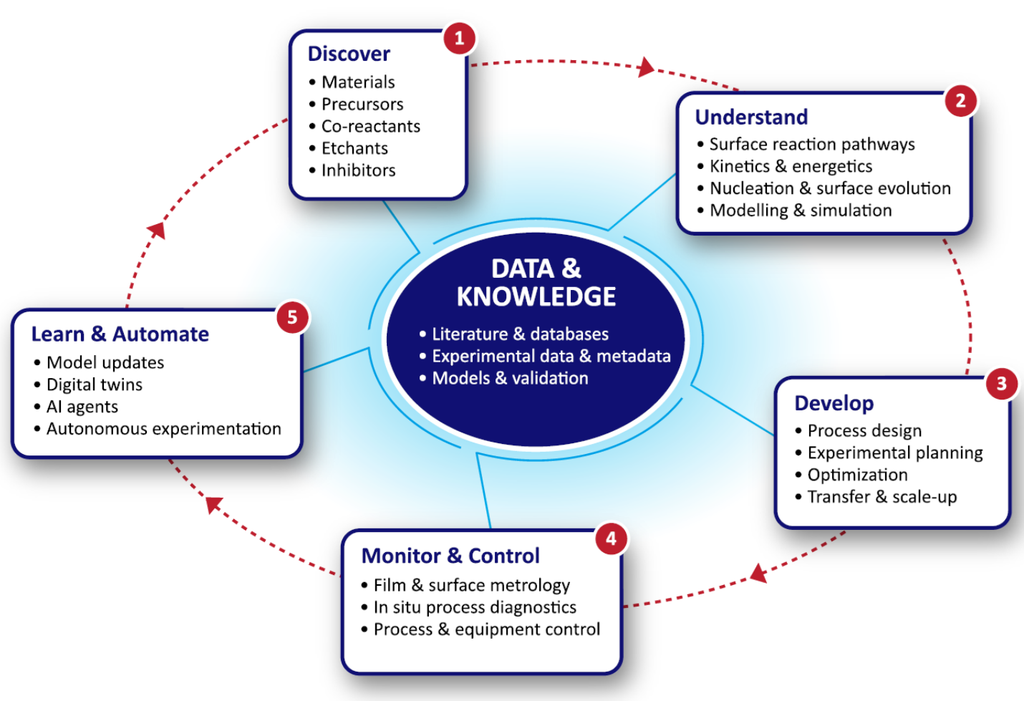
Taken together, the contributions nearly spanned the full ALD and ALE research workflow illustrated in the figure below. AI can assist in identifying materials, precursors, reactants, and inhibitors; offer insight into surface reactions and underlying mechanisms; support process design and optimization; interpret metrology and diagnostic data; and ultimately contribute to process control and automation. This does not imply that every application must evolve into a fully autonomous laboratory. In the near term, some of the most significant benefits are likely to arise from supporting individual research decisions: retrieving relevant information, choosing promising experiments, identifying trends, or transferring a process from one reactor to another.
While preparing this blog post, I came across a recent Chemistry of Materials editorial by Han-Bo-Ram Lee titled Synergistic Reinforcement between AI and Si. Published “hot off the press” only a few weeks after the conference, it closely reflected what I had observed in Tampa. Silicon technology underpins the computing hardware that enables modern AI, while AI in turn has the potential to accelerate the development of new semiconductor materials and processes. Advances on either side can therefore reinforce progress on the other.
Han-Bo-Ram Lee also offers a pragmatic view on where AI is likely to make an impact first, a perspective I have also been advocating over the past year. Process optimization is a natural entry point because semiconductor manufacturing already produces large volumes of process data. AI-driven materials discovery—another very hot topic that seems to be everywhere nowadays—will undoubtedly advance as well, but it remains more challenging because the relevant datasets tend to be smaller, less consistent, and more fragmented. In addition, the semiconductor industry is understandably conservative: introducing a new material or modifying a single step in a process flow that may contain hundreds of interconnected steps can have far-reaching consequences. Confidentiality further complicates matters, since much of the most valuable industrial process data cannot be shared openly.
These issues are especially relevant for ALD and ALE. Although the amount of published information is vast, much of it was not generated with AI applications in mind. Important metadata is often missing, terminology is not always consistent, results obtained using different methods are difficult to compare, and failed experiments are rarely reported. Even seemingly simple parameters such as growth per cycle can depend on reactor configuration, precursor delivery, substrate preparation, temperature calibration, and the method used to determine film thickness—all part of the experimental “iceberg” discussed earlier.
An AI-ready database must therefore go beyond being a large repository of papers or numerical values. The data should be structured and machine-readable, but also enriched with experimental context, provenance, uncertainty, and validation. Domain expertise remains essential to assess whether different results are truly comparable and whether a prediction is physically and chemically meaningful. AI may help us connect the dots, but we first need to provide the dots—and describe them properly.
Closely connected to the topics discussed above, we have recently published the following three papers. They originate from the ongoing AI-Aware Pathways to Sustainable Semiconductor Process and Manufacturing Technologies (AWASES) project, financially supported by Intel Corporation and Merck KGaA. The project and several of its main activities are also highlighted in the tutorial slides.
Jennifer D’Souza, Sören Auer, Eleni Poupaki, Alex Watkins, Anjana Devi, Riikka L. Puurunen, Bora Karasulu, Adriaan Mackus, and Erwin Kessels, Publishing FAIR and machine-actionable reviews in materials science: The case for symbolic knowledge in neuro-symbolic artificial intelligence, Journal of Vacuum Science & Technology A 44, 032408 (2026).
Sameer Sadruddin, Jennifer D’Souza, Eleni Poupaki, Alex Watkins, Bora Karasulu, Sören Auer, Adrie Mackus, and Erwin Kessels, SCHEMA-MINER^pro: Agentic AI for ontology grounding over LLM-discovered scientific schemas in a human-in-the-loop workflow, Semantic Web 17, 1 (2026).
Sameer Sadruddin, Eleni Poupaki, Jennifer D’Souza, Sören Auer, Alex Watkins, Bora Karasulu, Adriaan J. M. Mackus, and W. M. M. Kessels, Designing an agentic AI workflow for structured information extraction from scientific text: A case study on atomic layer deposition of ZnO and IGZO, Journal of Vacuum Science & Technology A 44, 032413 (2026).
My conclusion after ALD/ALE 2026 is therefore neither that AI will suddenly solve all process-development challenges nor that it is merely a passing trend. It will become a standard component of the ALD and ALE toolbox. Initially, it will mainly assist us in searching, organizing, analysing, and interpreting information. Over time—and perhaps faster than we might think—it will play a greater role in planning experiments, optimizing processes, and transferring knowledge between researchers and reactors. AI agents, digital twins, and self-driving laboratories may follow, although progress will likely be gradual and uneven across different parts of the workflow.
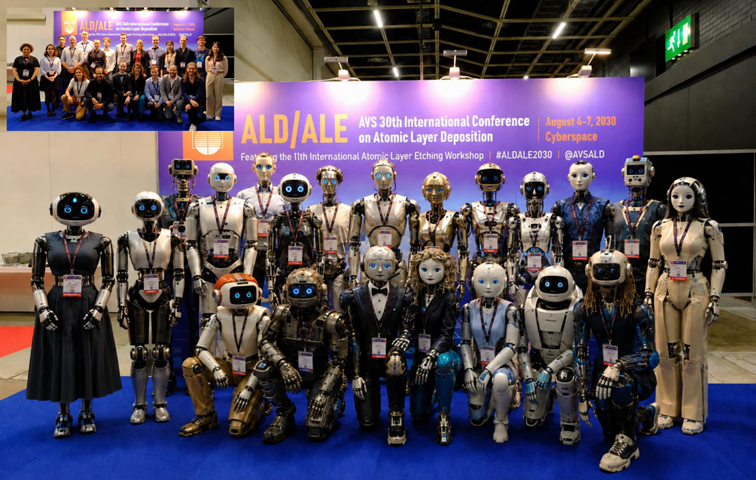
Whatever the future holds, reliable experiments, physical and chemical understanding, and critical validation will remain essential. AI should not replace the expertise of the ALD/ALE researcher; rather, it should help us apply that expertise more effectively. Whether it will also reshape the appearance of the community itself is another question. My colleague Paul Poodt ended his tutorial with the image below, offering a more literal vision of what an AI-enabled ALD/ALE community might eventually look like. I expect to still be present at the ALD/ALE 2030 conference—in person, rather than merely in cyberspace—and hope to still see you there as well.
Download the complete tutorial presentation: Current and Future Perspectives on Atomic Layer Deposition
